МОВЧАЗНИЙ СВІДОК (2026)
Year
2026
Dimensions
40×35 сm.
Materials
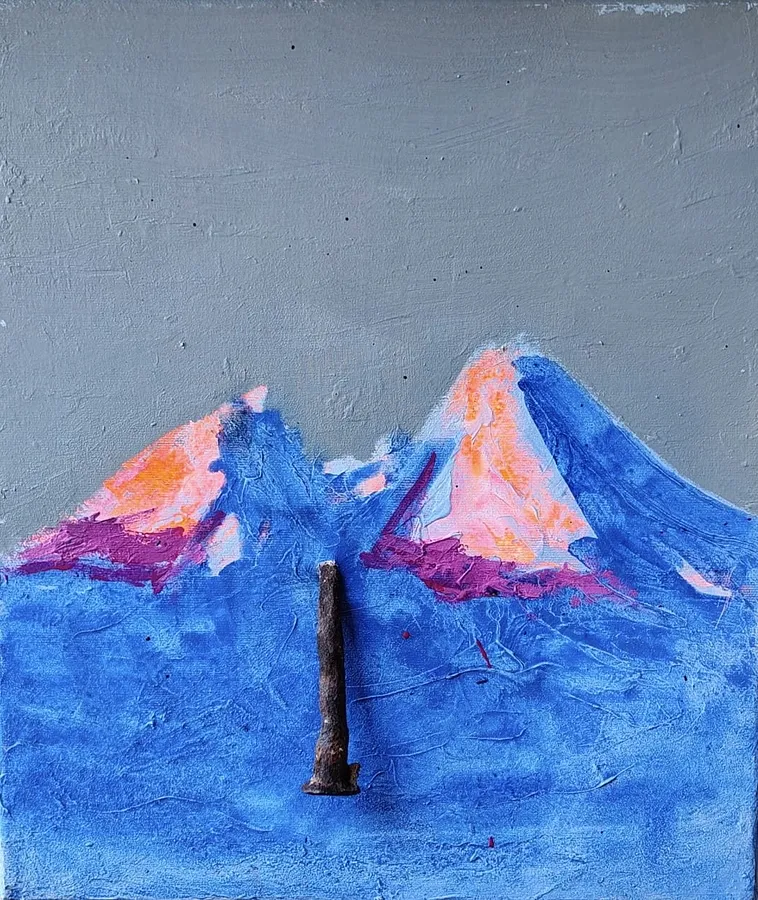
Oil on canvas, spike.
Medium
Painting
Price
Price on request
35 × 40 cm
A SILENT WITNESS
Erm Wohol /Bahrii ЛЪN
A pierced silence. An intrusion. A testimony. A transformed reality.
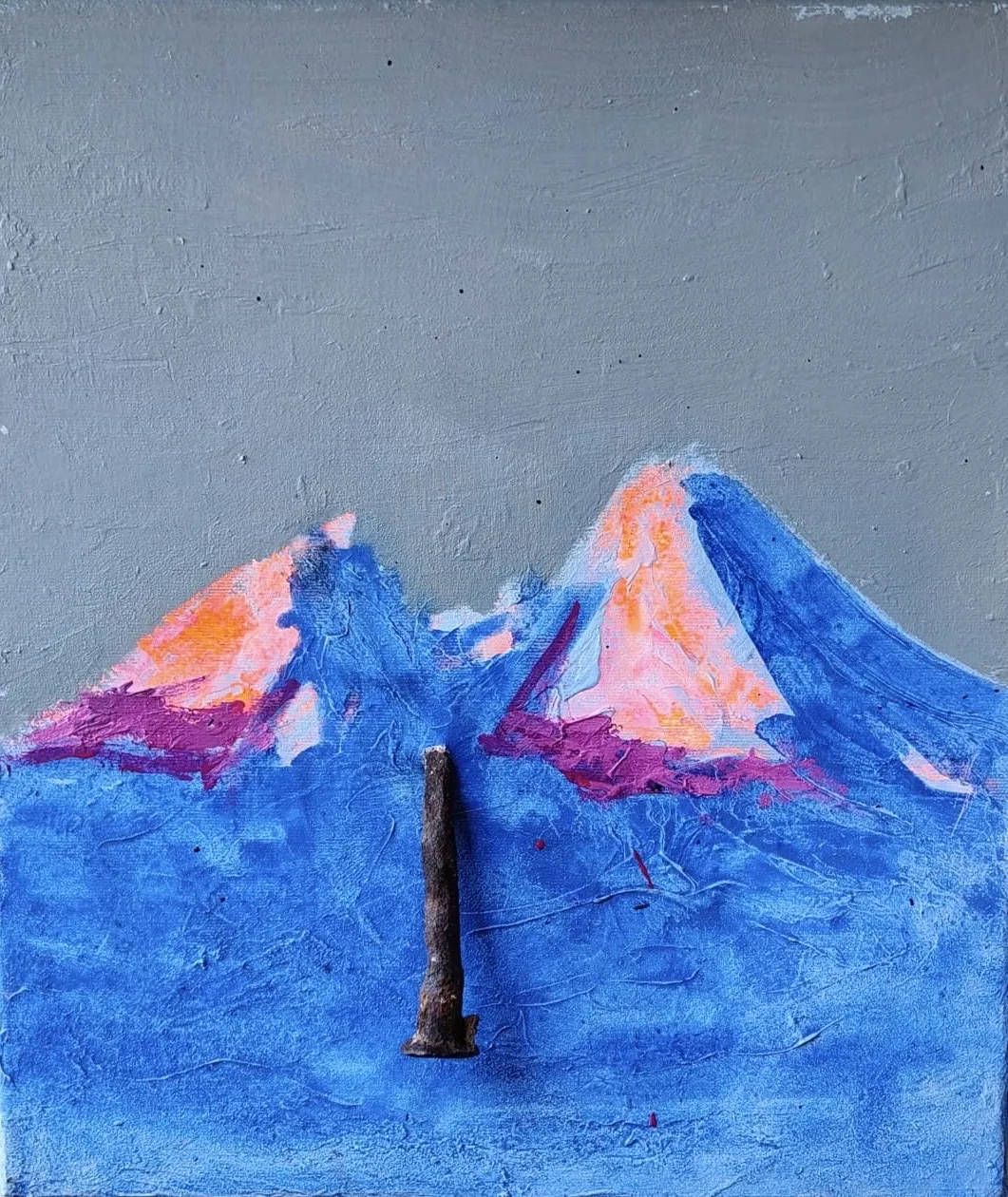
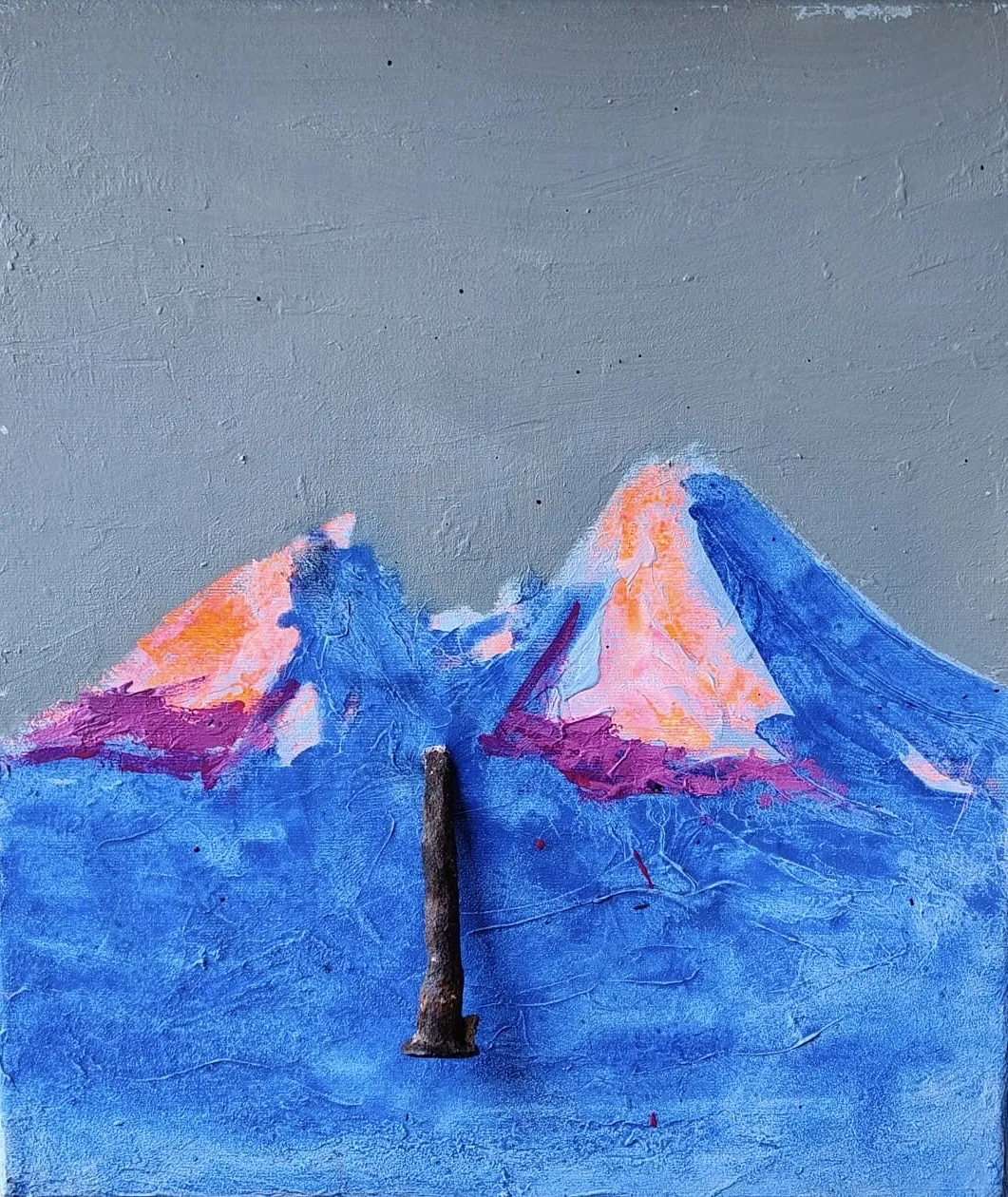
This work, depicting the peaks of the Watzmann massif, was painted in Bavaria about a decade ago. Its original conception had nothing to do with war.
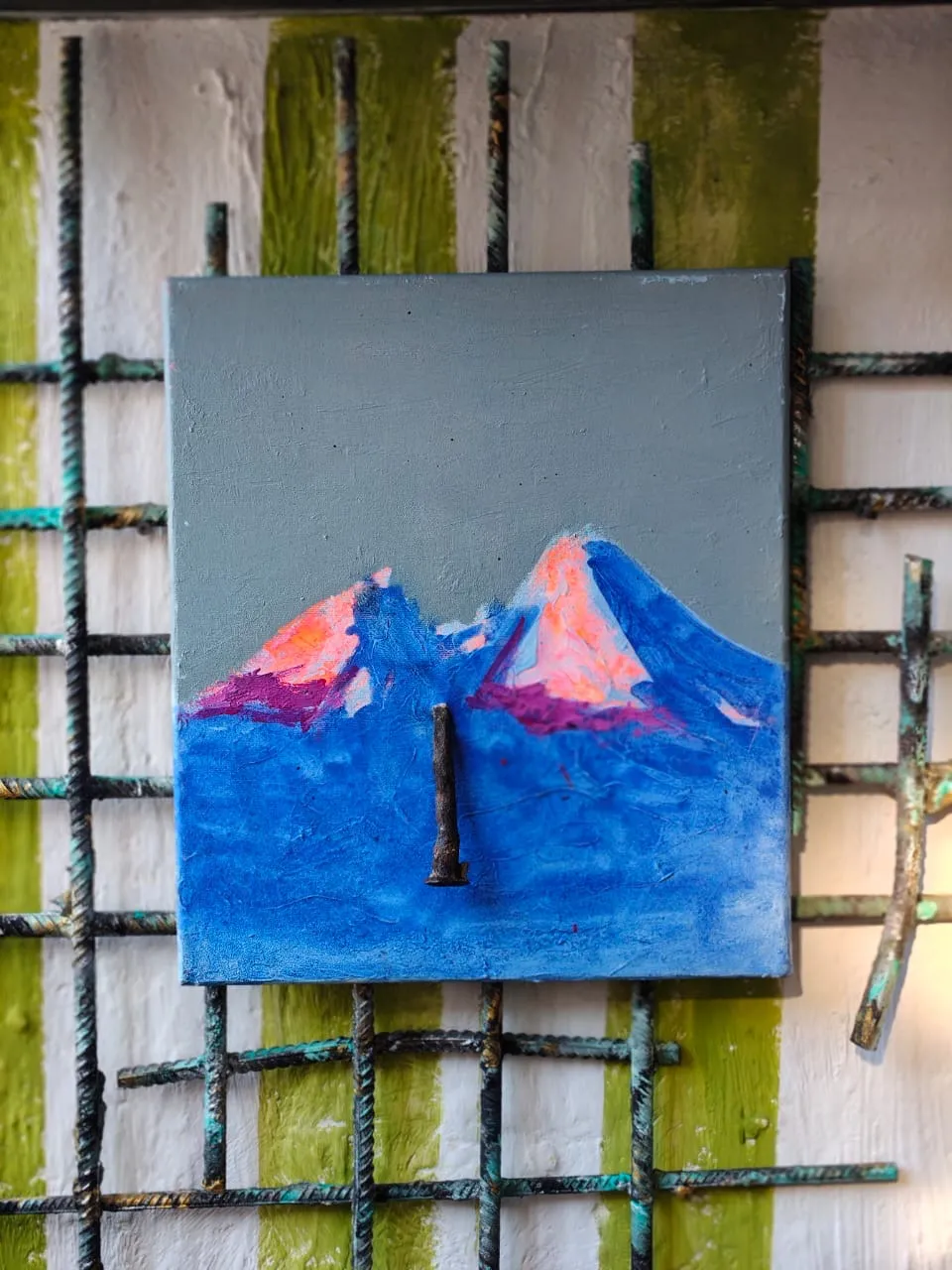
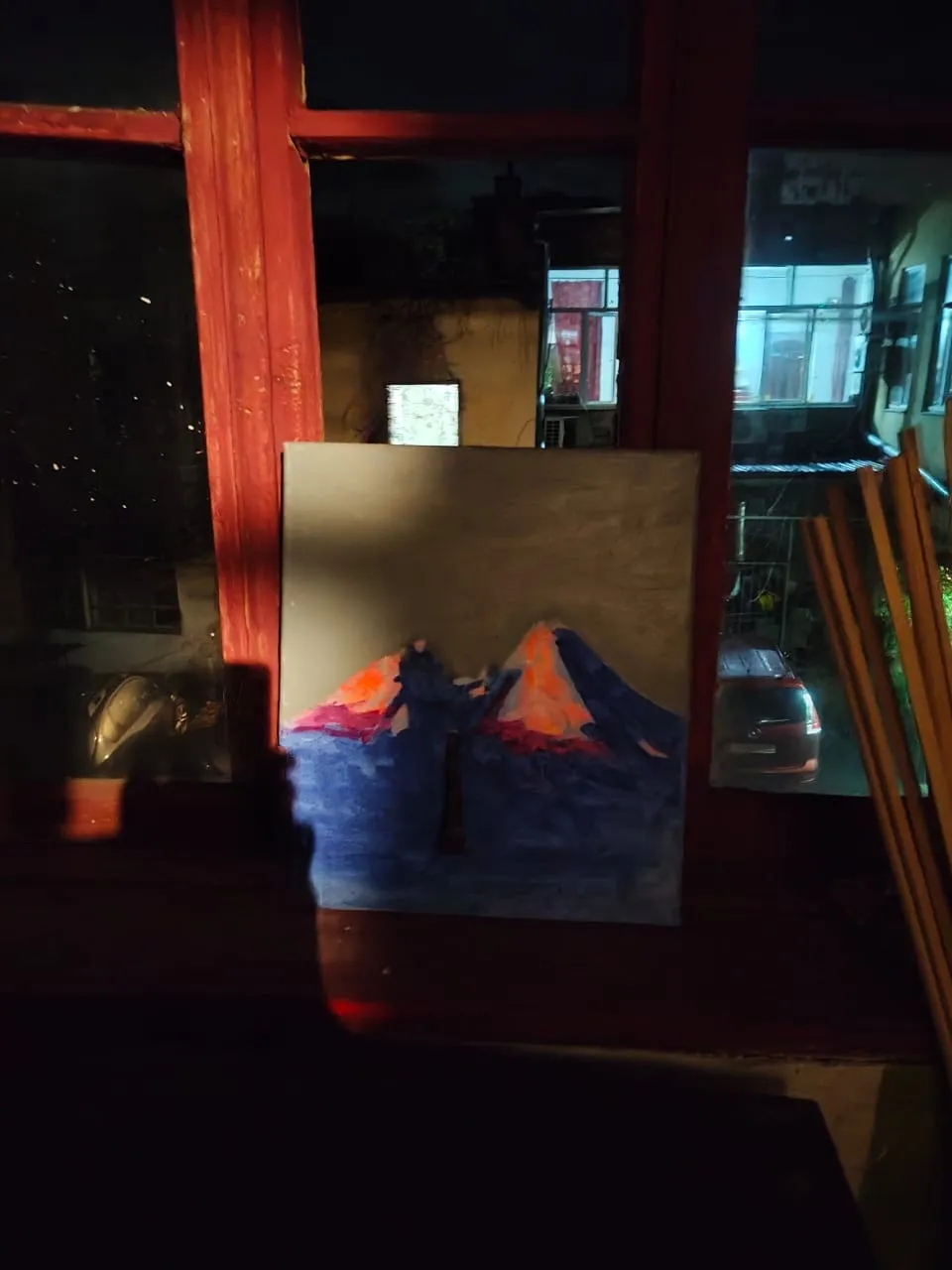
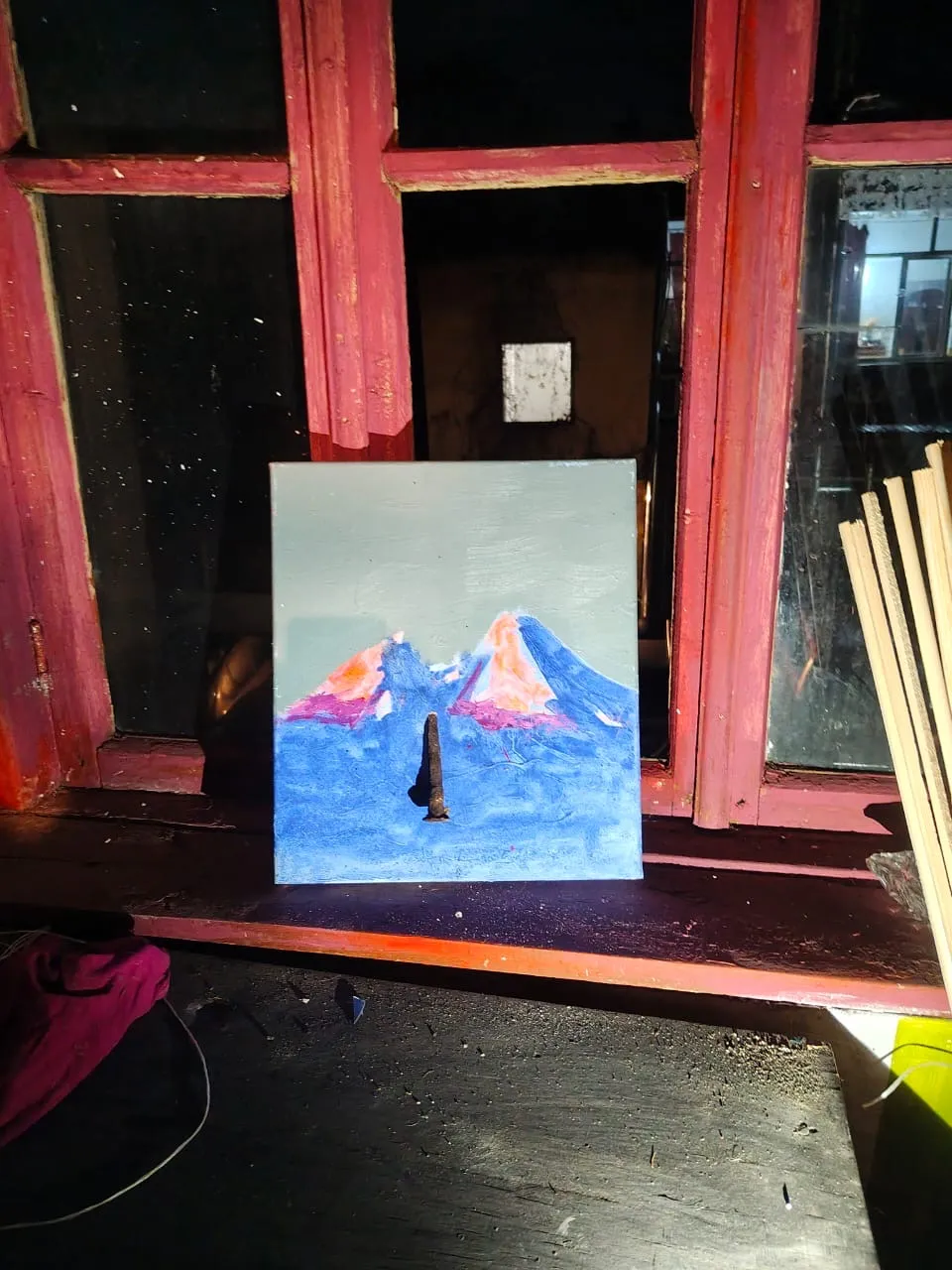
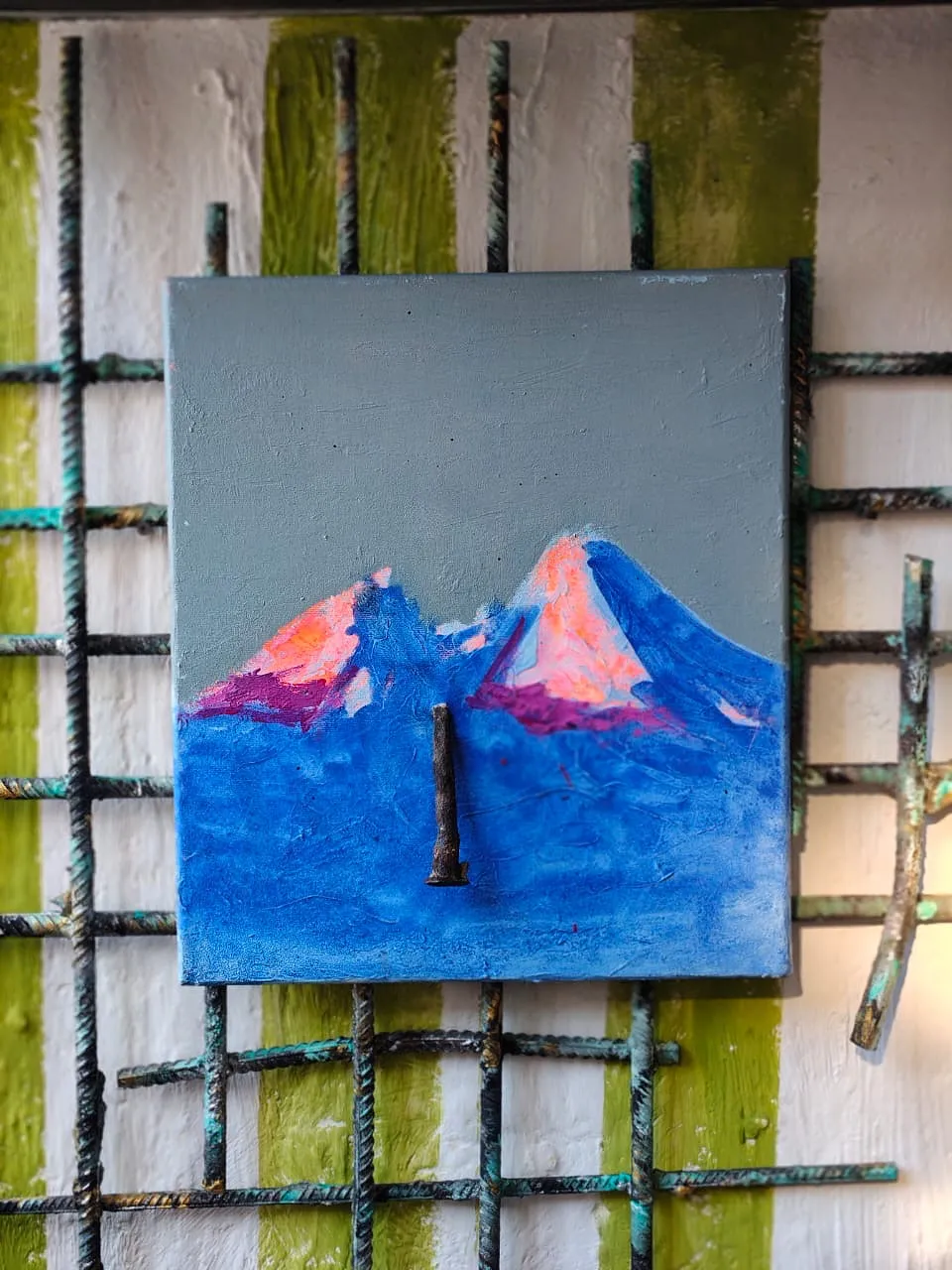
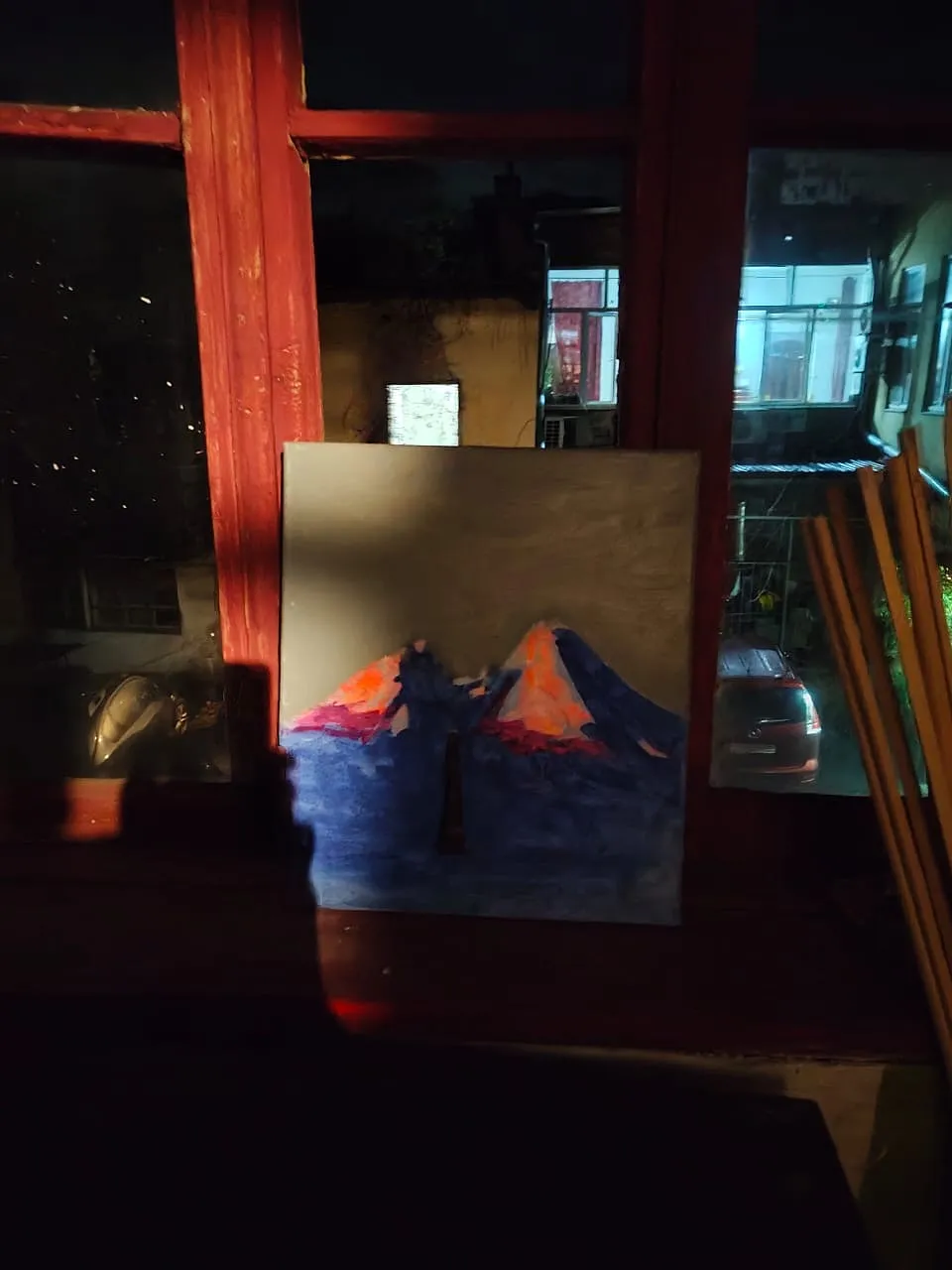
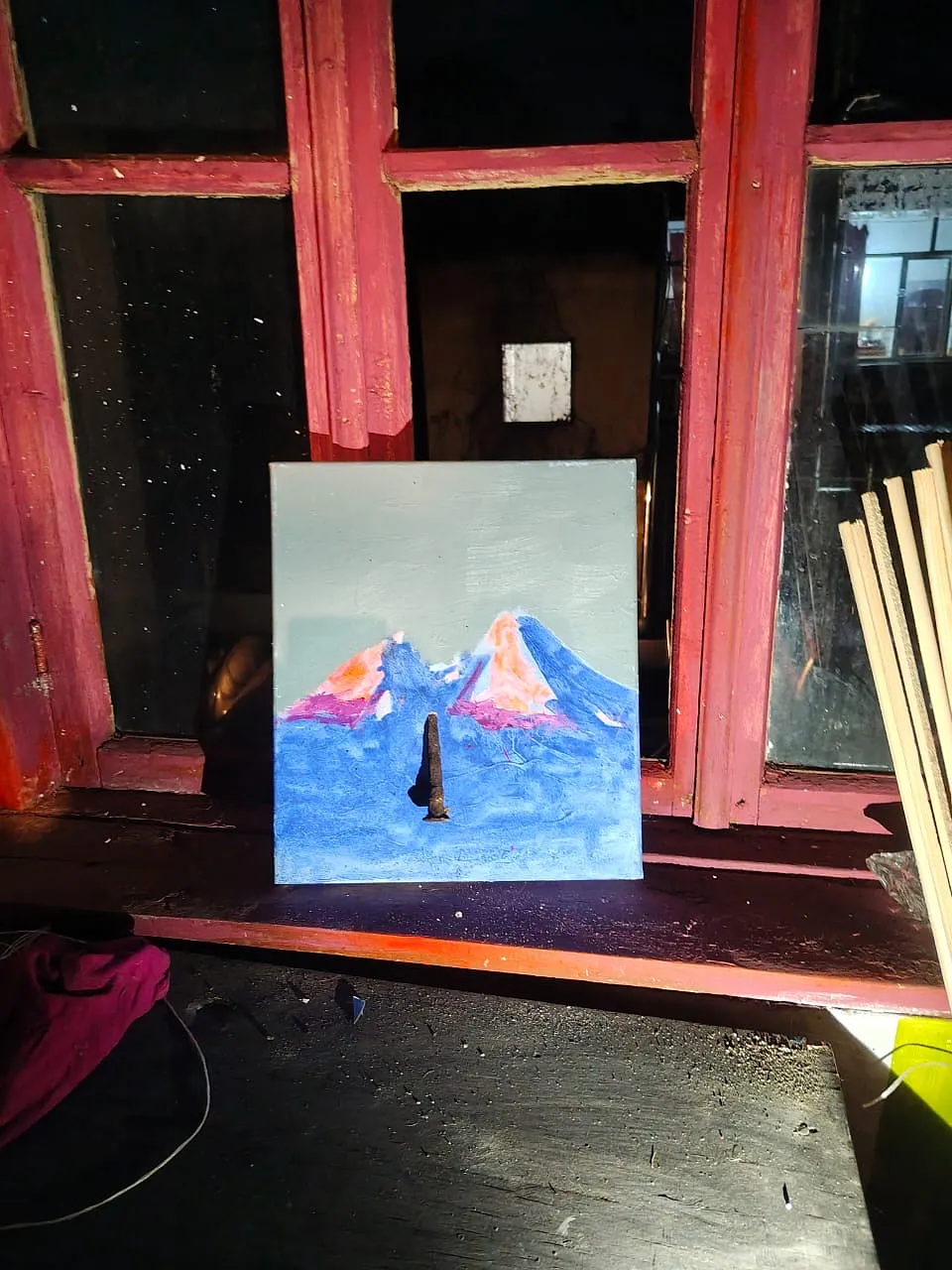
Yet, on November 18, 2026, reality intruded into the pictorial space from the outside, altering its context. Following a powerful shockwave caused by a military bombardment, a nail penetrated the painting. It pierced the surface and remained embedded there—much like what happens, day after day, to our own lives and our very souls.
The nail was never part of the composition; it was neither intended as a symbol nor employed as an artistic device. Instead, it became a tangible trace of an actual event—an event that changed the piece forever.
What we see now is no longer merely a painting; it is a testament to the moment the boundary between art and life was breached. A stroke of chance became part of the work, bestowing upon it an entirely new dimension.
Yet, this story holds another layer: a reflection on humanity, our actions, and our responsibility.
Human beings possess the capacity to create beauty, to imbue a space with imagery, emotion, and meaning. Yet, through our actions, our decisions—and, at times, our failure to fully grasp the consequences—we are also capable of destroying that which was crafted with love over a long period: things that are fragile, delicate, and beautiful.
Thus, two forces collide: creation and destruction, beauty and the intrusion upon it, the power to build and the responsibility for what has been entrusted to us.
There is no attempt here to depict war itself or to convey its overt, dramatic intensity. There exists tangible evidence of how reality can alter a work of art—not by destroying it, but by forever changing the way we perceive it.
The painting continues to exist. Its original pictorial world has not vanished; rather, it now contains something that was not there before.
And perhaps the central question posed by this work is: what are we capable of doing with the beauty that has been entrusted to us?
We know how to create beauty, but have we learned how to preserve it?
An artist need not depict a catastrophe to bear witness. Sometimes, a single, chance object is enough to grant a work a new dimension.
A silent witness to time.
Buy МОВЧАЗНИЙ СВІДОК (2026)
Year
2026
Dimensions
40×35 сm.
Materials
Oil on canvas, spike.
Medium
Painting
Price
Price on request
A SILENT WITNESS
Erm Wohol /Bahrii ЛЪN
A pierced silence. An intrusion. A testimony. A transformed reality.
This work, depicting the peaks of the Watzmann massif, was painted in Bavaria about a decade ago. Its original conception had nothing to do with war.
Yet, on November 18, 2026, reality intruded into the pictorial space from the outside, altering its context. Following a powerful shockwave caused by a military bombardment, a nail penetrated the painting. It pierced the surface and remained embedded there—much like what happens, day after day, to our own lives and our very souls.
The nail was never part of the composition; it was neither intended as a symbol nor employed as an artistic device. Instead, it became a tangible trace of an actual event—an event that changed the piece forever.
What we see now is no longer merely a painting; it is a testament to the moment the boundary between art and life was breached. A stroke of chance became part of the work, bestowing upon it an entirely new dimension.
Yet, this story holds another layer: a reflection on humanity, our actions, and our responsibility.
Human beings possess the capacity to create beauty, to imbue a space with imagery, emotion, and meaning. Yet, through our actions, our decisions—and, at times, our failure to fully grasp the consequences—we are also capable of destroying that which was crafted with love over a long period: things that are fragile, delicate, and beautiful.
Thus, two forces collide: creation and destruction, beauty and the intrusion upon it, the power to build and the responsibility for what has been entrusted to us.
There is no attempt here to depict war itself or to convey its overt, dramatic intensity. There exists tangible evidence of how reality can alter a work of art—not by destroying it, but by forever changing the way we perceive it.
The painting continues to exist. Its original pictorial world has not vanished; rather, it now contains something that was not there before.
And perhaps the central question posed by this work is: what are we capable of doing with the beauty that has been entrusted to us?
We know how to create beauty, but have we learned how to preserve it?
An artist need not depict a catastrophe to bear witness. Sometimes, a single, chance object is enough to grant a work a new dimension.
A silent witness to time.
Erm Wohol /Bahrii ЛЪN
A pierced silence. An intrusion. A testimony. A transformed reality.
This work, depicting the peaks of the Watzmann massif, was painted in Bavaria about a decade ago. Its original conception had nothing to do with war.
Yet, on November 18, 2026, reality intruded into the pictorial space from the outside, altering its context. Following a powerful shockwave caused by a military bombardment, a nail penetrated the painting. It pierced the surface and remained embedded there—much like what happens, day after day, to our own lives and our very souls.
The nail was never part of the composition; it was neither intended as a symbol nor employed as an artistic device. Instead, it became a tangible trace of an actual event—an event that changed the piece forever.
What we see now is no longer merely a painting; it is a testament to the moment the boundary between art and life was breached. A stroke of chance became part of the work, bestowing upon it an entirely new dimension.
Yet, this story holds another layer: a reflection on humanity, our actions, and our responsibility.
Human beings possess the capacity to create beauty, to imbue a space with imagery, emotion, and meaning. Yet, through our actions, our decisions—and, at times, our failure to fully grasp the consequences—we are also capable of destroying that which was crafted with love over a long period: things that are fragile, delicate, and beautiful.
Thus, two forces collide: creation and destruction, beauty and the intrusion upon it, the power to build and the responsibility for what has been entrusted to us.
There is no attempt here to depict war itself or to convey its overt, dramatic intensity. There exists tangible evidence of how reality can alter a work of art—not by destroying it, but by forever changing the way we perceive it.
The painting continues to exist. Its original pictorial world has not vanished; rather, it now contains something that was not there before.
And perhaps the central question posed by this work is: what are we capable of doing with the beauty that has been entrusted to us?
We know how to create beauty, but have we learned how to preserve it?
An artist need not depict a catastrophe to bear witness. Sometimes, a single, chance object is enough to grant a work a new dimension.
A silent witness to time.
Ask МОВЧАЗНИЙ СВІДОК (2026)
Year
2026
Dimensions
40×35 сm.
Materials
Oil on canvas, spike.
Medium
Painting
Price
Price on request
A SILENT WITNESS
Erm Wohol /Bahrii ЛЪN
A pierced silence. An intrusion. A testimony. A transformed reality.
This work, depicting the peaks of the Watzmann massif, was painted in Bavaria about a decade ago. Its original conception had nothing to do with war.
Yet, on November 18, 2026, reality intruded into the pictorial space from the outside, altering its context. Following a powerful shockwave caused by a military bombardment, a nail penetrated the painting. It pierced the surface and remained embedded there—much like what happens, day after day, to our own lives and our very souls.
The nail was never part of the composition; it was neither intended as a symbol nor employed as an artistic device. Instead, it became a tangible trace of an actual event—an event that changed the piece forever.
What we see now is no longer merely a painting; it is a testament to the moment the boundary between art and life was breached. A stroke of chance became part of the work, bestowing upon it an entirely new dimension.
Yet, this story holds another layer: a reflection on humanity, our actions, and our responsibility.
Human beings possess the capacity to create beauty, to imbue a space with imagery, emotion, and meaning. Yet, through our actions, our decisions—and, at times, our failure to fully grasp the consequences—we are also capable of destroying that which was crafted with love over a long period: things that are fragile, delicate, and beautiful.
Thus, two forces collide: creation and destruction, beauty and the intrusion upon it, the power to build and the responsibility for what has been entrusted to us.
There is no attempt here to depict war itself or to convey its overt, dramatic intensity. There exists tangible evidence of how reality can alter a work of art—not by destroying it, but by forever changing the way we perceive it.
The painting continues to exist. Its original pictorial world has not vanished; rather, it now contains something that was not there before.
And perhaps the central question posed by this work is: what are we capable of doing with the beauty that has been entrusted to us?
We know how to create beauty, but have we learned how to preserve it?
An artist need not depict a catastrophe to bear witness. Sometimes, a single, chance object is enough to grant a work a new dimension.
A silent witness to time.
Erm Wohol /Bahrii ЛЪN
A pierced silence. An intrusion. A testimony. A transformed reality.
This work, depicting the peaks of the Watzmann massif, was painted in Bavaria about a decade ago. Its original conception had nothing to do with war.
Yet, on November 18, 2026, reality intruded into the pictorial space from the outside, altering its context. Following a powerful shockwave caused by a military bombardment, a nail penetrated the painting. It pierced the surface and remained embedded there—much like what happens, day after day, to our own lives and our very souls.
The nail was never part of the composition; it was neither intended as a symbol nor employed as an artistic device. Instead, it became a tangible trace of an actual event—an event that changed the piece forever.
What we see now is no longer merely a painting; it is a testament to the moment the boundary between art and life was breached. A stroke of chance became part of the work, bestowing upon it an entirely new dimension.
Yet, this story holds another layer: a reflection on humanity, our actions, and our responsibility.
Human beings possess the capacity to create beauty, to imbue a space with imagery, emotion, and meaning. Yet, through our actions, our decisions—and, at times, our failure to fully grasp the consequences—we are also capable of destroying that which was crafted with love over a long period: things that are fragile, delicate, and beautiful.
Thus, two forces collide: creation and destruction, beauty and the intrusion upon it, the power to build and the responsibility for what has been entrusted to us.
There is no attempt here to depict war itself or to convey its overt, dramatic intensity. There exists tangible evidence of how reality can alter a work of art—not by destroying it, but by forever changing the way we perceive it.
The painting continues to exist. Its original pictorial world has not vanished; rather, it now contains something that was not there before.
And perhaps the central question posed by this work is: what are we capable of doing with the beauty that has been entrusted to us?
We know how to create beauty, but have we learned how to preserve it?
An artist need not depict a catastrophe to bear witness. Sometimes, a single, chance object is enough to grant a work a new dimension.
A silent witness to time.